Question 2: Statutory Question Required by HB 1300, a tax cap on the education portion of property taxes and a limit on administrative expenses.
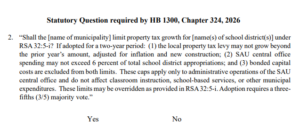
On November 3, every voter in New Hampshire will see Question 2 on the ballot. It’s worded to sound appealing to property owners, but it could mean real cuts that affect Oyster River students. Here’s what you need to know.
What is Question 2?
Question 2 is a local ballot question created by HB 1300, a law passed by the legislature in Concord and signed into law by Governor Ayotte in June.
If 60% or more of the voters who vote on the question agree to it, the school portion of the property taxes in the District would be limited to the inflation rate plus an adjustment for new construction. Also, SAU central office spending would be limited to not more than 6 percent of total school district appropriations.
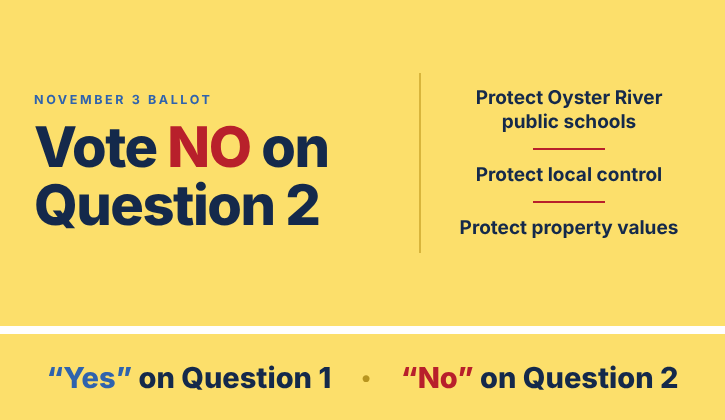
Question 2 needs 60% of the votes cast on it to pass. If you leave Question 2 blank, your ballot doesn’t count toward that total either way. So, it is important to Vote NO. Don’t skip it.
Why is a school budget question on the November ballot instead of in March?
In the Oyster River School District, we decide our school budget every winter through the school district deliberative meeting process. Residents can ask questions, hear directly from the school board, debate the budget, and propose changes. Voters can also propose ballot measures, including a tax cap. One was proposed last year. Voters voted against it in March.
THIS QUESTION IS DIFFERENT. NH HB 1300 was signed into law this summer. There is no requirement for a community meeting to ask questions, and there is no opportunity for the community to propose amendments to the ballot question. Instead, a confusing paragraph with a yes/no choice appears on the ballot.
What would it mean for our schools?
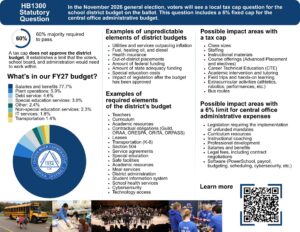
Most of a school budget isn’t optional. In Oyster River’s FY27 budget, 77.7% goes to salaries and benefits. Many other costs are required or hard to predict. These include:
- Special education and out-of-district placements
- Health insurance
- Fuel, heating oil, utilities, and transportation
- Changes in state and federal funding
- New state mandates passed after the budget is approved
When these costs rise faster than the limit allows, the cuts have to come from everything else. The school district has identified areas that could be affected:
- Class sizes and staffing
- Advanced Placement courses and electives
- Career Technical Education
- Tutoring and academic support
- Field trips and hands-on learning
- Athletics, robotics, music, and performances
- Bus routes
The ballot language says classroom instruction won’t be affected. There’s no guarantee of that. To go above the limit in any year, the district would need a 60% vote at the district meeting, which is a high bar to clear year after year.
Why vote NO?
To protect our students. Oyster River’s strong schools are built on the programs, teachers, and opportunities Question 2 puts at risk.
To protect our home values. The quality of our schools is a big part of what our homes are worth, whether or not you have children in school. When schools are underfunded, property values suffer.
To keep our community’s ability to invest in our schools. Every year, Durham, Lee, and Madbury voters choose to invest in the next generation. Question 2 would take that choice away from us.
Because it won’t fix property taxes. Our property taxes are high because New Hampshire underfunds public education and pushes the cost onto local towns. Real relief means Concord paying its fair share, not cutting what our kids get.
Because of who’s behind it. Question 2 comes from the same Concord politicians who keep shifting money away from public schools and into vouchers. It is opposed by the NH School Boards Association, the NH School Administrators Association, and New Hampshire’s teachers.
What can you do?
- Learn the facts. Review the Oyster River School District’s information page on Question 2:
https://www.orcsd.org/departments/business-office/tax-cap-hb-1300
- Watch the October 21 ORCSD Public Hearing about Question 2:
https://www.youtube.com/watch?v=aJi4Kt_NgnU&t=788s
- Talk to your neighbors and friends. Many voters don’t know Question 2 is on the ballot. Tell them what it means and ask them to vote NO.
- Vote “NO” on Question 2 on Tuesday, November 3.
Additional resources
Articles
|